Episode 4 - Joe Pulizzi - Epic Content Marketing- How To Tell A Different Story
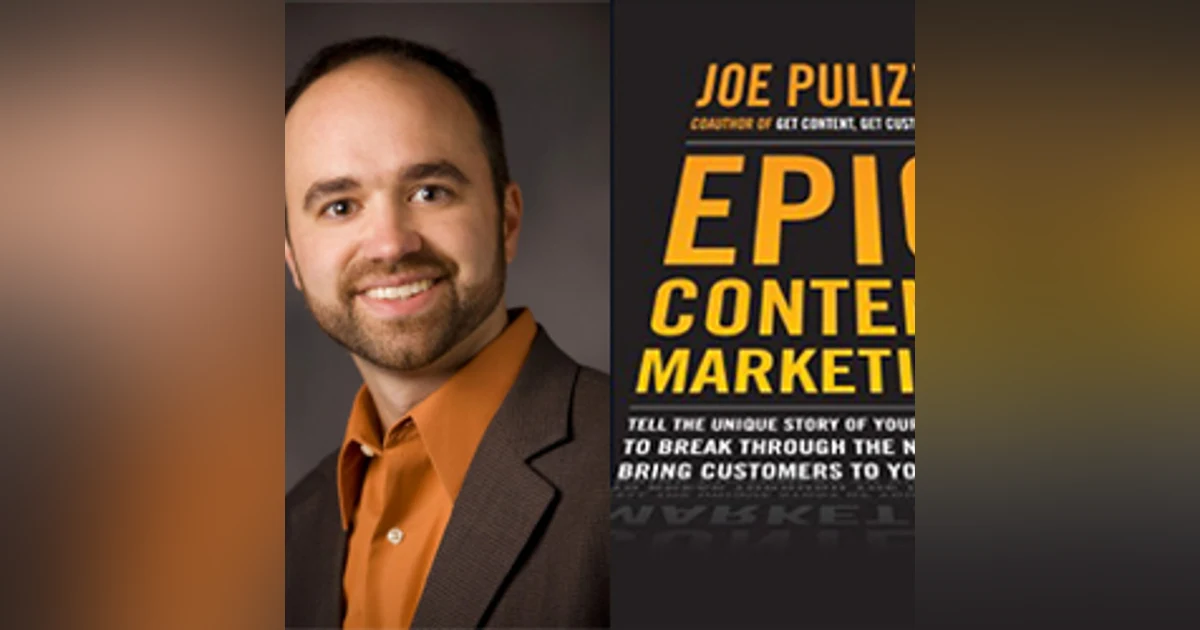
On this episode of http://SocialBuzzONAIR.com we chat with Joe Pulizzi, the brains behind the http://ContentMarketingInstitute.com about his BRAND NEW book, Epic Content Marketing: How to Tell a Different Story, Break through the Clutter, and Win More Customers by Marketing LessWe dig into why Joe wrote the book, what content marketing is and how you can leverage it for your brand.Grab your copy of Joe's book here! http://www.amazon.com/Epic-Content-Marketing-Different-Customers/dp/0071819894 See acast.com/privacy for privacy and opt-out information.

 Apple Podcasts
 iHeartRadio
 Spotify
 Amazon Music
 Audible
 Castbox
 Deezer
 On this episode of http://SocialBuzzONAIR.com we chat with Joe Pulizzi, the brains behind the http://ContentMarketingInstitute.com about his BRAND NEW book, Epic Content Marketing: How to Tell a Different Story, Break through the Clutter, and Win More Customers by Marketing LessWe dig into why Joe wrote the book, what content marketing is and how you can leverage it for your brand.Grab your copy of Joe's book here! http://www.amazon.com/Epic-Content-Marketing-Different-Customers/dp/0071819894
See acast.com/privacy for privacy and opt-out information.
Oh, yeah, we know what that sound means. This is Social Buzz on Air. What is happening, everybody? This is your host, Sebastian Rusk. As always, hey, welcome to the show. Got a very exciting show coming up for my good buddy Joe Pelize's on the show talking about his brand new book. Content Marketing. What in the world is that all about? Well, you come to the right place because you're gonna really better understand exactly what content marketing is all about and what you need to be doing for your brand. The book's called Epic Content Marketing, How to Tell a Different Story, Break Through the Clutter, and Win More Customers by Marketing Less. Friends, help me welcome to the show, Joe Pelizi. What's happening, Joe?
SPEAKER_01Sebastian, pleasure to be on. Thanks for having me. Love the intro. I'm excited. Let's do it.
SPEAKER_00It is my job to make you look awesome.
SPEAKER_01Well, you're already off to a great start. I'm liking it.
SPEAKER_00I appreciate that. You know, Joe, when I look at the title of this book, um, I think I heard Gary V say one time um content is king, but marketing is queen and she runs the house. I I think those two really come together, but it is true. Content is king. Why the title of this book?
SPEAKER_01Well, I think the I mean, if you just look at the stats, Sebastian, everybody's doing some form of content marketing, but do they really know what they're doing? I mean, if you go out, I've I talked to, you know, hundreds of people all over the world, and but the majority of marketers out there have no content marketing plan at all. We're just creating content to fill buckets. And I think that the reason why epic content marketing was created in the first place is because we really have to think more like media companies. We have to think like publishers, and it it that means you have to set in the processes to do so. So, I mean, the the whole reason why we do this book is hey, you need to think differently about your marketing. If you really want to be the go-to resource for your customers, you've got to create amazing content that's that's going to make an impact on their lives.
SPEAKER_00I you know, I think amazing content comes down to creating content that you yourself would want to read. Because there's too much push still happening um in the social space and online space with brands instead of the pull. And if you've got good content, the pull is a give-in almost.
SPEAKER_01Well, I think that it's that, and it's also the fact that we're thinking about selling our products and services first. And if you're gonna create great content, you have to not do that. Because we all want to get out of our, oh, we've got great widgets, we've got the best services in the world, whatever. And you've got to realize that nobody cares about any of that stuff. They don't want to be sold to. So you have to really think about what if you were the trade magazine for your industry? How would you position yourself? What kind of content would you deliver? Would you do it on a consistent basis? Which, by the way, Sebastian, if you ask me why do most content marketing programs fail, I would tell you the number one reason is because they stop. And that's it's a tra it's a tragedy. We have this campaign mentality about our marketing. And by the way, there's there's room for campaigns, don't get me wrong. But with content marketing, it's a marathon and not a sprint. You have to create content at the same time. The the like you want we want to be must-see TV here. And if we're gonna do that, we've got to make sure that we get our customers to tune into us and say, look, I cannot go this day, this week, this month without engaging in this content. And I don't think enough marketers think that way.
SPEAKER_00They really don't. And I but I believe that shift is on its way because marketers will be forced to shift their way of thinking because it's just the way things are done. You're not the same. I always like to say, Joe, and I'm sure you agree with this the sales process is now the last process. It's providing valuable content, engaging your audience through that content, becoming that go-to source, and then by default, you become top of mind. So when the sales opportunity presents itself, it's a no-brainer for people. Do you agree with that?
SPEAKER_01Well, I what I love is what fits perfectly with that, Sebastian, is the idea of do you have a subscription strategy? I mean, most of the marketers that we talk to out there, and I'm talking about billion-dollar companies, they're like, okay, I gotta get the lead in so that I can throw the lead over to sales and we can convert and then I'm gonna move on. Like it's a there's a better way to do it. Why don't we create a long-term relationship through our content with customers? And when they're ready to buy, which is what they're gonna do anyways, then they'll raise their hands. Right. Because you've given them all that knowledge and they really trust you instead of saying, oh, let's get them in, let's try to convert them and let's move them on. It's like, no, no, no. What's what's different from people that subscribe to your content versus those that don't? If you can answer that question, it will change everything about how you market your products and services.
SPEAKER_00I could not agree with that more. Let's dive right into the table of contents I've got here right in front of me so people can really get a grasp on what epic content marketing is really all about. I think it's important for us just to start with the very first chapter and what your idea was behind that. Um, I'm assuming just to help people really better understand what is content marketing.
SPEAKER_01Well, I mean, uh the it's funny because the first three chapters, you know, what is it, the history of it, and why content marketing, I think the first thing you got to realize is this is not anything new. I mean, you talk to most organizations or most marketers, they think, oh, this is a new thing with the internet. I mean, content marketing has been going on since the dawn of time. I mean, we use the example John Deere, who developed the Furrow magazine back in 1895, because they felt if we could make our customers smarter about how they grow their businesses, they will end up buying from us. And of course, this is a hundred-plus-year-old content product. And by the way, the Furrow magazine is the largest distributed uh media product in the farming industry, larger than any other media company out there. And I like to start with that and say, that's really what we're doing. We're trying to create valuable, relevant, compelling content on a consistent basis in order to enhance or change a behavior. If you're not enhancing or changing a behavior in some way, Sebastian, you're just creating content, you're just creating noise. We want to be nice to our customers and give them this great content, but we've got to be moving the business forward. But we do that first by focusing on the pain points of our customers, and then we can say, yes, we can create this relationship through some kind of a commerce, a sale, uh, whatever it takes to get into, you know, our their buying process becoming part of our sales process.
SPEAKER_00Absolutely. So we talked about the why in chapter one. Uh skip up to chapter three talks about the why, why content marketing, Joe.
SPEAKER_01Uh, is there any other way today, Sebastian? I don't think so. That's my my take. Yeah. If you, by the way, if you have lots of money that you can waste out there, and by the way, I'm not a I'm not a traditional marketing hater. I think that there's, I mean, but I like to use traditional marketing to promote content because at the end of the day, we don't have to go and around the media. So think about it this way: uh think about the things that you engage in on a daily basis to get your education to become smarter, to be uh entertained, whatever the case is. Instead of advertising around that, why don't we just become the content? There's no barriers to entry today for us to become publishers. We have all the technology needs, there's all the help out there in the world. Journalists are trying to, you know, they're moving to the dark side to help brands become better storytellers. Uh what if you've got a ton of content, you can still try to interrupt them. You can still say, oh no, don't pay attention to this content. I want you to buy this widget over here. Why don't we just become the content, create that relationship? And with social media, with, you know, let's say you want to be uh have social media work for your brand in any way, or you're trying to get search engine optimization to work, you want to be found in Google, or you're trying to drive demand generation. That all starts with a content marketing strategy in the middle. And I think so many companies and individuals, they go to Google first or they go to Facebook or Twitter, and they're not focusing on, look, what do I have that's interesting to say that's gonna drive my business? That's where we need to start.
SPEAKER_00You know, this podcast is great content. Isn't that a form of of what brands need to be doing? I mean, podcast, and I'm not tooting my own horn. I'm just when people say, Why would you have a why would you have a podcast? Well, in today's technology, you can talk about your brand, talk about people that are within your industry, that are doing things, like-minded individuals, share that content, and it's quick and easy. People can now listen to your content. Would you consider a podcast epic? Not just this one, of course, Joe.
SPEAKER_01No, no, you should. Yeah, this is epic content marketing, absolutely. But think about it this way. So let's say that you are going, I mean, you're creating an amazing, consistent program of educational information for your target group. This is an asset. You've created an asset. In most advertising and sponsorship, it's fleeting. It's not an asset. It's like if you don't get what you need to get off of that advertisement right there, it's gone. But with this program, you not only have the podcast, but you can reimagine that content into multiple ways. You've got blog posts. Those blog posts could turn into books, they could turn into ebooks. You have a whole wealth of information that you could create, and you're your own media company. And I think because you're looking at it that way, you're able to affect your customers in a completely different way, and you have a competitive advantage over everyone else trying to target their audience through Facebook ads or pay-per-click or whatever the case is.
SPEAKER_00You know, it's funny you say that because it's so easy and repurposing content is so awesome. You and I were chatting about the press release that Vocus and PR Web sent out regarding the bow ties and the MC stuff that I'm that I've been involved with. And I I not only did I share the link that they posted uh with the press release, but the press release has my MC reel in it. It's got a link back to my press kit. And then I just found right before you and I hopped on to start our conversation the opportunity to download the PDF from PR Web that allows me to upload it somewhere, grab the code. I took that and I stuck it on my website as a new blog post, and now I'll go take the original content that was on the website, now put it on our website, and I'll start marketing that content from the home base versus the other place and still giving credit to the person who wrote the release. In my opinion, that's this is what what did we do 10 years ago?
SPEAKER_01Oh, well, what's great about this is in you planning for it, and and I love to use an example from Kelly Services. If you know the old, you know, the old Kelly girl, uh, this is big industrial human resources outsourcing uh Kelly services. And they, when they create a story idea or they say, okay, here's a pain point that our customers really have. We're going to tell that story in 20 different ways through blog posts, through the different, you know, we target three or four different buyer personas. We're gonna do that in line. What are we gonna do on Facebook? How are we gonna tell that story on LinkedIn? How are we gonna tell it on our blog, on Pinterest, on Instagram, on Vine, whatever the case is, but you plan for that up front. And I I mean, I'll give you another example Epic Content Marketing, the book. I mean, people ask me, Joe, how did you end up writing this book? It's you know, 350 pages, it's uh it's a reference piece. How did you do that? And I said, I planned for that 18 months ago. And I started writing blog posts because I knew I do a, I mean, this is my third book, and we use a blog to book strategy. So we plan out, you know, I plan out writing blog posts that will ultimately be part of a bigger reference piece, which becomes the book. I think if more people had that mentality of planning for what the long-term vision of your content program is, it it's not so uh you don't feel so overwhelmed with, oh, I've got to create this content all the time. You actually create an editorial calendar and then it all starts to make sense and you're building a media empire.
SPEAKER_00Absolutely. It's crazy how it all ties together and it's so easy to do. Brands just have to do it. So uh moving up to chapter seven, more right or less right. Can you elaborate on that?
SPEAKER_01Oh, this is you know, we we were talking about Jay Bear before, author of Utility, good friend of both of ours. That I took, I completely stole a Jay Bear line, and he said content marketing is about being more right or less right, because we're all, and even though content marketing hasn't been around for hundreds of years, we're still experimenting. We're still at that stage where you know we don't really know what's what works. Good consumers are in complete control. How do we know what's going to engage them? So I think that what it is is you put the plan together. First of all, please put a plan. I don't care if it's on a napkin. I mean, figure out you know, what are you trying to do? What is your what are the objectives for you? And then what are the informational pain points of your customers? Focus on a channel and start delivering to that, and then get that feedback and start altering it. I mean, well, I grew up in the publishing industry, and when we started a media brand, we had a three-year plan. It doesn't mean we consistently stayed the same with everything we did. And so, oh, we we do a magazine every month and we do we changed it all the time, and then we try to get to that more right, but there is no silver bullet strategy. I can't tell you, I mean, I've done probably 200, 250 different content marketing strategies for different brands. Every one of them has been different because every customer group is different and every one of the objectives of the brands is different. So you've got to find out what really works for you, but really you're not gonna learn until you start doing it.
SPEAKER_00This is true. So uh chapter nine talks about the goal of subscription. What is the goal of subscription for brands?
SPEAKER_01This is my favorite thing. You know what, Sebastian, I don't get why most more brands don't. I mean, we talk about email subscription and we talk about, you know, you may be a subscriber to a magazine, but I think like we were talking about before, I think we see our the that customer buying cycle as more disposable. And I would like to think of it as this is a lifelong relationship we want to keep with our customers. And what we've realized, and I'll give you a sample of what we've done at Content Marketing Institute, what we've learned through our subscribers that sign up for our daily emails or our weekly email newsletters, we know that 80% of our revenue that comes into Content Marketing Institute are from subscribers of at least six months or more. I mean, that's that's life-changing, business-changing data that we can use. And we know that our customers aren't going to buy as often or as much unless they are first subscribers and they start believing in our content, they trust in our content, they see us as credible, then they start going to our events or our webinars, signing up for our classes, whatever the case is. And I so I think that if you don't have a subscription strategy for your organization, you are missing out. And I'll just end with this because I think it's so critical. Don't build your, don't, don't build your media empire on rented land, which means I'm all for Facebook fans and YouTube subscribers and uh and Twitter followers and all that stuff. I mean, though that's an important part of connecting with our customers. But you know what? You don't own any of that. You know who owns that? Facebook, YouTube, Twitter. They own those connections, not you. Email is really where we can own that email database and we can communicate through that one-to-one relationship if we wish to use that properly. And that's something that if all those other channels go away, we've still got that. That is an asset. And I wish more brand marketers would look at it that way.
SPEAKER_00Most definitely. Yeah, you definitely don't want to uh set up camp in somebody else's camp, especially when that camp is a lot bigger than you and they could uh do with whatever they want uh pertaining to your content. Great advice on that. Chapter 14 talks about building an editorial calendar. Most brands are shooting in the dark. I think a lot of the uh quote unquote editorial meetings that'll happen with uh digital and social teams for brands are all right, what do you want to talk about this week? Or what should we talk about this week? How does a brand properly build an editorial calendar?
SPEAKER_01Well, first of all, I mean, you you need to build out I would I like to do it in a year out. Uh a lot of people will say quarterly, but you build it out. First of all, you go through what are the themes, what are the stories that we need to be telling over the next year from the most important thing. By the way, I have no problem with surveys, I have no problem with looking at social chatter, uh, following you know, hashtags on Twitter. Those are all very important things to do. But you know what, Sebastian, if you're not talking to customers, you are in the dark. You have to first talk to your customers to build proper personas because how can you build a buyer persona without actually talking to the buyer? Which, by the way, Sebastian, most marketers don't even talk to customers when they're building their personas. So please talk to your customers. I would say at minimum, five to ten customers you're talking to a month so that you can start to build that calendar and then work it backwards. So you might say, okay, here's how we're gonna do it for a year, and then let's build in the quarterly schedules for that. And then in the quarter, then you build into what are we going to do today? And that's for every channel you have. So how are we communicating on Twitter today? How are we doing it on Facebook? How are we going to do it on our blog? How are we doing it in email? And you build that out and have somebody own that in your organization, you know, every week, every day, every week, every month, whatever the case is. And the other, that's the other thing, Sebastian. You have to have somebody own this process. Don't just say, oh, okay, we've we're going to do Facebook today. Who's got the content? Somebody go find some content to throw up there. Right. That's why, that's why we have lots of pictures of kittens and babies on our Facebook page because we have no idea what to talk about. We're like, oh, this will get lots of likes. This will get engagement. That's not the kind of engagement we want. We want something that's has something to do with what we're selling in the long run or how we're going to inspire our customers. It's uh it's just a plan, and and we talk about in the chapters all kinds of easy tools to use that. It's just setting up that process to make it happen.
SPEAKER_00And actually doing it. So when it comes to content, I I like to my customers and clients constantly ask, well, what do we talk about, Sebastian? If we can't sell our stuff all day, what do we talk about? And I firmly believe, and I've talked about this since day one, and I say day one is you know 2005, which was like yesterday. But content is really broken in, I believe, when a as far as a brand is concerned, to stay away from the push and to and to embrace the pull as much as possible. There's really three different ways to attack content. Number one, what is your brand all about? Number two, what is your industry all about? And number three, what are some trending things people are talking about? And yes, sometimes that does include a cute kitten or a motivational quote or a nice sunset or some breaking positive news. Um, no government-related news, but positive breaking news. Would you agree that's accurate when when trying to better understand what type of content brand should use?
SPEAKER_01Well, I think that's one way to do it, Sebastian. But I, and as we talked about before, there's no silver bullet. And the one thing that I recommend, and and I think it's chapter 13 in the book, we talk about creating a content marketing mission statement, which hardly any companies do, which I think is critical to really finding out what you should be talking about. And it's sort of this is the thing that you put in front of you so that you know, oh, we don't want to be talking about this, we need to be talking about that. And it's just three things it's specifically who are we talking to? Who is the who that we that is our audience? And that, by the way, you might have, let's say if you're a B2B company, you might have seven or eight influencers or buyers in the process. This is the to the one that you're talking to. This is why content is so hard. Because you can't do a content marketing program to seven different buyers. You have to do it to one. So who is that one? What are you going to be delivering? So, what channel are you going to focus on? What kind of useful, entertaining items are you going to send? And the most important thing is what is the outcome for the reader? What do you want them to get out of it? And I think that's where so many brands miss it because our the outcome for a usual mission statement would be we want them to we want to sell more stuff. We want to buy more of our widgets, our products. But really, the outcome is what do you is it going to help them in their jobs in some way? Are they going to help them in their lives in some way? Those are the types of things we got to figure out. And then once you have those three things, Sebastian, then you can start to say, this is our litmus test for all the content we're going to create. And if it doesn't fit into that mission statement, you don't talk about it. You talk about just what's going on within that mission statement.
SPEAKER_00That's really great advice. And I couldn't, you know, I couldn't agree with your thought process more. Uh, we're almost out of time, but before we close things out, um, you again, you're gonna have to pick up the book. By the way, uh it's available uh wherever books are sold. Amazon would probably get you a copy tomorrow, is the fastest way to do that. Uh epic content marketing, uh the brains behind this book, Joe Pelizi. We're chatting it up about what epic content marketing is all about, what this book is all about. Let's wrap things up, uh, helping our listeners better understand exactly what they can do to measure the impact of their content marketing.
SPEAKER_01The the number one thing I'm actually I'll I'm gonna end it like this because I think it's and some it's so important. Look at think about these six things, and then we'll talk a little bit about measurement. First of all, does your content fill a need? Like the like check the box here, because this is important. Is it fill a need? Is it consistent? It means every day, every week, every month, whatever you're sending, is it consistent? Are you talking like a human being? Which is so this is not encyclopedia content, folks. Do you have a point of view? You have to take a stance. This is not just okay, here's the five tips to whatever. You really need to take a stance. Uh because look at what great editorial. What do great stories do? It has a point, it has a purpose. You need to do that too. Are you removing the sale? You got to remember the more you talk about your products and services, the less that will travel through social, the less that will be shared. And the most important thing, I think you really need to have the goal of we need to be best of breed for our audience. I mean, you really need to think about becoming the go-to resource resource for your organization. And then if you think, okay, how do I measure this and bring this down? We talk about it a lot in the book about return on objective. Very simply, what is your objective to the content program? Are you trying to shorten the sales cycle? Do you or is it a customer upsell? Are you trying to keep customers longer? I think that is the key to getting everything started. And this is marketing. I mean, this is you really need to focus on what your objectives are. I see so many uh content programs, they have objectives like you want more web traffic. I mean, that's a that's a metric. By the way, it's a fine metric to use, but that's not an objective. I would go first, just let's get real basic here, Sebastian. Go first and say, Did does your content marketing program actually have an objective behind it that talks to three things. Is it generating sales in some way? Is it saving costs in some way, or is it creating happier customers? If your objective does not line up with one of those three, you probably have a metric and not an objective.
SPEAKER_00Awesome advice. And again, once again, could not agree more. Friends, if you want to stay in touch with Joe, you can follow him on Twitter at Joe Pelezi. That's P-U-L-I-Z-Z-I. He is the brains behind contentmarketinginstitute.com. Be sure to check them out. All kinds of very interesting content, no pun intended. Well, we know what that sound means. We are out of time. Joe, I really appreciate your time. It's been such a pleasure uh to connect with you over the past few months. Good old Jay Baer um making the great connections uh here in this digital space. And it's so easy these days for us to connect and really better understand uh what we're all doing and really support the effort. I love what's going on here. This I can't wait to get this epic content out to my audience because everyone always wants to know more about epic content. Make sure you pick up a copy of Epic Content Marketing sold anywhere a book is sold. The easiest way to grab one is probably on Amazon, right, Joe?
SPEAKER_01That's probably the best. You can go to epiccontentmarketing.com as well, and there's a free chapter there. If you if you need a little bit more uh convincing, you can get that there. But yeah, epiccontentmarketing.com, and we've got about eight places you can buy the book.
SPEAKER_00Awesome. Well, hey, we are out of time. Thanks once again, Joe. Hey, I'm Sebastian Russ signing off from our studio here in downtown Miami for Social Buzz on Air. We'll talk to you next time.