The Social Media Sucks Show Tyler Anderson Social Media Marketing And Hospitality
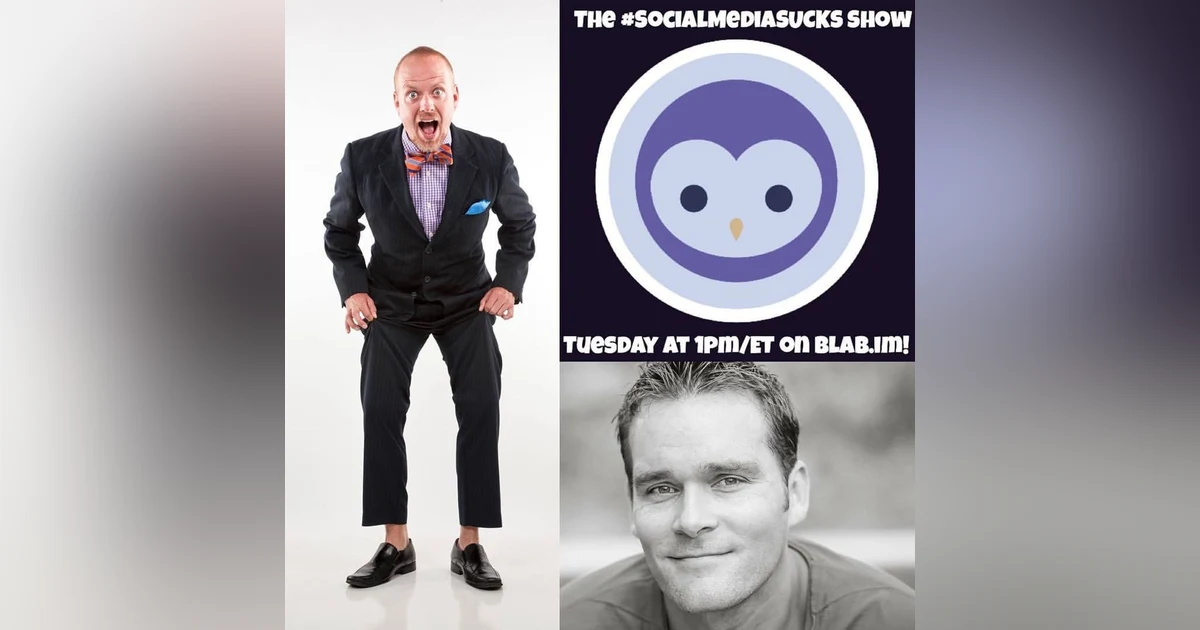
a http://SocialBuzzONAIR.com productiona http://SocialBuzzTV.com productionThe Social Media Sucks Show - Tyler J. Anderson : Social Media Marketing and HospitalityThis week on the show we have Tyler Anderson, Founder of http://CasualFridays.com - a full service social media agency based in San Diego, CA that focuses on social media management for hotels. See acast.com/privacy for privacy and opt-out information.

 Apple Podcasts
 iHeartRadio
 Spotify
 Amazon Music
 Audible
 Castbox
 Deezer
 a http://SocialBuzzONAIR.com productiona http://SocialBuzzTV.com productionThe Social Media Sucks Show - Tyler J. Anderson : Social Media Marketing and HospitalityThis week on the show we have Tyler Anderson, Founder of http://CasualFridays.com - a full service social media agency based in San Diego, CA that focuses on social media management for hotels.
See acast.com/privacy for privacy and opt-out information.
What is happening, everybody? Welcome to the social media suck show. I'm your host, Sebastian Rusk. As always, hey, welcome to the show. My trusty co-host and guest this week is my buddy Tyler Anderson coming to me from the beautiful 72 and breezy San Diego. What's happening, Tyler?
SPEAKER_00Not much. Excited to be here on the show. It's not 72 and breezy today. We've been getting our winner from cold front right now.
SPEAKER_01So we have two. It was 56 this morning here.
SPEAKER_00Come on. That's not what we pay a sunshine tax for a reason, right?
SPEAKER_01I hey, I um I um I had to break out a light jacket today. That that's what had to go on. That's what had to go on today. So um you and I linked up when you were here at some point last year, and you kind of walked me through your your story, and I was I was still intrigued by it because um the fact that you know it started in a traditional format with social media sprinkled in and then blossomed into this what is now Casual Friday. So so first of all, let's let's start off. And for those of you just joining us, my name is Sebastian Ross. I am a social media strategy. I wrote a book called Social Media Sucks. If you don't know what you're doing, and uh we do this show a couple times a week, sometimes it's once a week, sometimes it's twice a week. We bring individuals just like Tyler on that are in the space doing really cool stuff, having a conversation. Hopefully, you're gonna be able to extract two or three things that you did not show up here with, and we'll be able to help you better understand what you don't know, that you don't know, so that your social media doesn't suck. So, anyway, Tyler Anderson is the brains behind casual Fridays. He's gonna uh uh bring us back to the to the to the early radio days um and and help us better understand how casual Fridays became the social media empire that it is today.
SPEAKER_00I guess you could say that. No. Um yeah, like a lot of people in this space, you know. I I kind of got started, I want to say around 2009. And actually, I'm not gonna say I want to. That is when I got started, but I think that's when a lot of people really kind of started dabbling in this space and becoming consultants with it. And I was very similar to many of those other people. Um, I had a typical corporate job, uh maybe not typical, but I worked for I worked for radio. I worked for a huge radio station conglomerate. Um, I was not on the airwaves, so I was not behind the microphone, but I was you know more or less um in management at that radio station. But I always embraced the digital side. So uh part of how I kind of got on the fast track of the management at a younger age is um well Sebastian, were you in radio too? I feel like you were, weren't you?
SPEAKER_01No, I wasn't. My my dad was for 30 years, and um, you know, my my grandma's always said I have a great face for radio. So um, well, that's why we're doing this right here. No, no, no, no radio experience yet. Yet, but um Secrets might need a replacement one day, and I'm available.
SPEAKER_00Sure. Well, funny story about Secrets. So the girl who was my promotional intern back in the day, she's now his co-host. So uh for the people who who kind of get early in radio and and you work your way up, and if you work hard, you can definitely make it. But that's uh Ellen. No, Ellen retired. So his new co-host, Sissony.
SPEAKER_01Oh yeah, the the young girl.
SPEAKER_00Sissene was my promo, she was one of my promotional interns back in like 2002 in San Diego.
SPEAKER_01There's a lot of Ellen retired, huh? Life's good.
SPEAKER_00I guess so. Yeah, she's done. She's living in the living large now. Um but back to the story. So yeah, so in radio, you know, everybody knows that most of the revenue is generated, of course, from radio commercials. Uh around mid-2000s, though, there was a huge uh initiative for what we called in the industry NTR, which stands for non-traditional revenue. And a lot of times that was um more sponsorships related, but digital just started getting like in lumped into that as well. And so I uh I was an early adapter to MySpace back in the day. Make fun of it. I know a lot of people will for the for us early adapters on MySpace, but I swear I was probably one of the first 1,000 people on that platform, and I spent so much time on there. And um, you know, not to get off track, but it's funny because a lot of like how we used MySpace is very similar to how you know the the younger millennials and the teens are using you know apps like Snapchat or Instagram when when that was cool. Like it's really it's not that there's anything new, it's just it's just all part of the cycle. When I was that age, when I was like 18, 19, 20, I was all over those channels too. Like the My Spaces, that's what was available to us back then. But so I created some uh I created some social media campaigns, if you will, uh around 2005 and uh for some of my bigger clients on the radio station, like Pepsi and Vitamin Water, and a lot of them had a social media component, which is really MySpace. I created the official MySpace pages for the radio station, and that's when I kind of saw the light bulb that this is gonna be the next big thing. And there's gonna be an opportunity for brands to leverage this from a marketing perspective. So um I still stuck around in radio. You know, I like to say you get the golden handcuffs, if you will, especially when you move into management, you get that comfortable salary, and it's hard to want to maybe branch off and start your own business. But in 2009, I I was, you know, I was in a position where I had the opportunity to do so. And um, yeah, like I said, like a lot of people in this space. I kind of started off as a consultancy. I had you know a few clients on my own. Uh, I would work with them. I pretty much did everything, but then slowly you just kind of see this like shift where you need to build a support team. And so it started off with interns, and then fast forward to today. Now Casual Fridays is a full-time social media agency, and we're north of uh 30 employees here um operating in with clients throughout the United States, but we have teams kind of scattered throughout the country uh in about five states, I think. So including right in your backwoods there in Miami.
SPEAKER_01That's great. You guys have had some rapid growth over the past um the past few years, and you've you've really found your niche within the hospitality, um, specifically the hotel um um niche. Um talk talk about that a little bit.
SPEAKER_00Yeah, so you know, like everything, like I I mean I'm I'm I I'm not gonna say I was lucky because it uh you know at the end of the day, you have to still do a good job, but I was in in essence kind of lucky that the hospitality thing kind of fell into my lap. Um, you know, when when I started it, most of my clients were very regional and right in my backyard. Most of them were in San Diego. And uh through a contact that I had, I basically got my foot in the door with one of the hotels, but it was not necessarily for to do the hotel's social media, but it was for one of their nightclubs. They had a huge rooftop nightclub, and that was like that was the end. And then, of course, you have to do a good job, you have to show them, you know, impact on their bottom line, and we did that, and then it kind of spiraled from there. And then it was through word of mouth marketing. Then it was, you know, we picked up you know five premium hotels here in San Diego, then some in North County, LA, Orange County. They kind of sprinkled up to San Francisco, and then again, you know, a lot of these um hotels have ownership groups that have presences throughout the country, and then next thing I know, we kind of we jumped over to the Atlanta market and then we got down to Florida. It just kind of grows. And so very lucky in that sense. And you know, I guess you could say yes, we have a strong niche there. We we really do know it well from a host social media standpoint. Um, but it's interesting. Like I would not say that we exclusively want to work with hotels or in the hospitality industry. That's something I I really did give serious thought to uh around last year. Uh you know, everybody always says go niche, and I thought, okay, we should maybe exclusively focus on hotels. But we hired some business coaches to help us kind of go through the growth of our company. And one of them said, Listen, if you know, brand X, and I can't remember the example he gave, it might have been like Taco Bell, for example, though. He's like, if Taco Bell calls you and they want to do some work with you, would you say no? And I'm like, No, I would I wouldn't pass that up. He's like, Okay, so you do not want to be niche in hospitality. But then we went through a series of exercises, and so how we kind of identify the brands or companies that we want to work with is that you know, we want to work with fun and exciting companies. That's that's who we want. And of course, a lot of hotels are fun and exciting.
SPEAKER_01Right. I'm the same way. I have to get excited about the product or brand. You know, if your product sucks, social media is not gonna fix it. That's that that's for sure.
SPEAKER_00It totally, I mean, that that's something I think that a lot of businesses, especially in the early days of when they were hiring companies like ours or yours or other consultants, is they didn't want to do any of the heavy lifting and they felt like, okay, we're we're struggling, so we should just magically have this great social media presence, and it's gonna magically increase our bottom lines and all this new revenue is gonna come into us. And that's really not the truth. I mean, it it's it could be far from it. Like at the end of the day, yeah, yes, social media can help drive sales, but you know, a lot of times the the initial kind of connection on these social channels is already gonna come with your current customers. Um, it's not gonna be somebody who's never heard of your company, and then all of a sudden they're gonna go, Oh my god, I'm gonna like this company, even though I've never done business with them before. I'm gonna like them. And I'm gonna go ahead and buy all their products and services, and I want to be bombarded by all these great social media posts from this company, it doesn't work that way. So I'm kind of paraphrasing the statistic, but I want to say I came across something that in a study that Jay Bear's group did a couple of years ago, about 84% or something like that of your, you know, your likes and your followers are comprised of your current or past customers. So again, to your point, Sebastian, if you know if your product sucks, you're not gonna have an amazing social media presence.
SPEAKER_01No, not not not at all. Well, what's been the biggest obstacle that you've experienced as an agency um working within the social space since 2009?
SPEAKER_00Uh getting client buy-in. You know, it's one thing to get the client buy-in where they want to just hire you and and you know, pay a monthly retainer or whatever it is. But to me, I really uh hey, thanks everybody. I see somebody has to jump out there. To me, the biggest thing where I think that it like the obstacle is getting just the buy-in of them believing what you're doing for them and also wanting to support them. You can't you can't outsource social media 100% where you just don't do a darn thing. Like you still be connected to some degree. You have to communicate with your team who's doing social media, you have to provide you know feedback of what's happening in and around your business or your industry, you know, or or a lot of times, you know, a lot of the things that are happening on these social channels, you know, they need to be taken offline and then they need to be resolved, you know, you know, outside of social media. And if the client doesn't want to do that, it's you know, it's not gonna fix them. Um so to me, I think that's definitely a big thing. The the other thing, you know, again, I'm a marketing guy by default. That's how we got in this space. I think a lot of us got in this space. Um, and I know a lot of times they want to they want to judge the ROI on their social media campaign, and particularly with the hospitality space, uh, that's a little bit it can be a little tricky sometimes. You know, people aren't jumping on Facebook or Instagram to book a hotel room. So but there's other aspects of of social media that we do want to quantify that ROI, and just because a lot of these guests do expect that they're aud that they're you know, these these hotels are just businesses are going to respond to them. I mean, you look at Jay Bear's new book, Now Hug Your Haters, and he has endless data points now of how people want to be responded to within minutes or hours. And so, you know, if you're not having a presence and you're not engaging with your your your your I don't want to say audience, but your customers through these social media channels, you know, how do you how do you quantify the ROI on that? And one of the examples I always like to give is a hotel, for example. What would the ROI be if you did not have a front desk attendant, yet you had a hotel guest coming in to check in and no one's there to greet them? Or if they want to come down in the middle of the night and go speak to a front desk attendant, maybe to raise a concern about something, but no one's there to address it. You know, what's the ROI on that? And that's what we're seeing a lot of times with social media is that more and more of these hotel guests are using it as a channel to communicate with these hotels as opposed to just, you know, wanting to uh engage with them. Like they really they don't just want to engage on the cool pool shots. They literally do want to go and send private messages or tweets and get their questions answered.
SPEAKER_01Yeah, I mean, I and I think that that's not, you know, that's not just for hotels. I think that's for restaurants. I think that's for any service-based business, hospitality, I guess if you if you will, but service-based is dealing with the one-to-one communication or contact rather with uh you know, with the customer, with the consumer. Um, what what's the best thing that you've seen happen um with with within working with with the brands that you do within social media? Has it been the the shift in in understanding and thought process?
SPEAKER_00Um I yeah, I mean, I think definitely that you know, we are to a point now where I think a majority of them do understand that this is nothing that's going away. They've now come to understand, you know, to me, what one of the best things is that they are recognizing now that it's not just marketing, that it is also customer service. So that's you know, that's huge. I I had a huge win, I'd say, a week ago. Um I finally want a client kind of somewhat recognized like, hey, maybe we should not be paying 100% of your services out of our marketing budget, but that's partially an operational budget, you know, because the social media side of it is almost even parts of operations now for a lot of these companies as it is just marketing. So it's not fair necessarily to always want to quantify the spend on what we're getting for social media campaigns, you know, if it's a customer service angle.
SPEAKER_01Right. Um sorry, Ricky, I had to mute you, dude. We were getting some feedback here. Hold on, let me unmute you real quick. What's up, Ricky? How you doing, bro?
SPEAKER_03Hey guys, I'm here from Vancouver Canada. Just jumped on the blab. Uh, thanks for having me on the show, and I'm happy to contribute any way I can.
SPEAKER_01Hey, thanks to be here. Did you have any specific questions for Tyler?
SPEAKER_03Um, yeah, I'm a blogger, so uh my blog is daddyblogger.com and uh, you know, I'm always looking to uh connect with brands and uh get sponsors and uh build my uh you know, obviously, social media following. So any advice specifically to uh the blogger community?
SPEAKER_00Well, I mean, you know, I'll tell you this. It's also it's it's it's equal the meal, the mute uh can't talk today, Vegas, right? The feeling is mutually uh agreed upon, I guess you could say a lot of these brands and businesses want to work with bloggers, you know. So um I know they that's something that they even task us agencies and there's services we can use and go out and search for bloggers. Um I will say this, you know, sometimes from from the agency standpoint, the hard part is weeding through like what's authentic and real and what's not. You know, we want to make sure that we're tapping into quote unquote bloggers or influencers who have an authentic audience, an audience that is also aligned with who the the the companies or the brands are trying to reach. Um for example, like you know, it's it's it's kind of you want to make sure if it's a niche business, for example, the hospitality side, you know, they're not gonna want to go and probably target with a a fashion blogger. I mean, some might if it's like in Miami, I could maybe make the case because there's a great big strong fashion scene up there. But for you know the average one, they might want to be really kind of to sell the destination more. Like a travel blogger. Now, a daddy blogger could uh definitely fit in that too, because maybe you're a dad blogger, but you're you're maybe part of your blog posts a lot of times are like you know, handles for families and getaways for you to do with your kids as a dad, and maybe the hotel that has some really cool attractions and there's some good family activities that a dad and his sons or daughters might do together. So that could be the angle. But I guess going back to answering your question, you know, I'd say just make sure you continuously um you know build up a good audience. It's not necessarily about a huge massive following, but a responsive following. So if you guys will engage with you, that's great. And if you have an idea, pitch it to them. Yeah, honestly, that's the best ones. Pitch it to them. If you uh again, and Ricky, I have not read your blog, but let's just go along with that example I just started with. Let's just say you are blog making a series of blog posts about you know 10 summer activities or getaways to do with your family. You come up with some of these, and maybe one of them's in let's just say, I don't know, Dallas, Texas, and you know, maybe go do some research. What is it you'd like to go do in Dallas? Okay, you're gonna want to go do that, you want to go do this, you maybe you want to go visit uh, you know, a Ranger baseball game. And then I just directly reach out to the brands that you want to be included with that. Hey, here's what I'm proposing. Make a little one sheet on it, and I I just pitch it to them and tell them what you're gonna you know give them in exchange for X services, whether they're gonna sponsor your your your trip or they're gonna sponsor your website. I just be proactive. So that's my advice.
SPEAKER_03Awesome. Great thought, uh, great thoughts there. You brought up the term engagement and you know connecting. Uh, you know, I I feel it's fairly easy to get a following just by you know following people on Twitter or Facebook and they follow you back. But the whole other thing is about engagement. So, do you have any tips on how to get engagement and how to get responses back and forth, how to create dialogue, uh anything from crying when you're on blab.
SPEAKER_00No, to me, the uh that wasn't me actually, that might be Ricky. Ricky, do you have a kid with you?
SPEAKER_03Yeah, that's my son in the back. I'm just waiting for my daughter at preschool, so we're hanging out in the car here. That's our son crying.
SPEAKER_00Got it.
SPEAKER_01He's singing back up.
SPEAKER_00I'll I'll um I'll I'll answer your question here. But yeah, so to me, the key to engagement is to go ahead and be engaging yourself. You know, nobody wants to have follow someone who never responds back. So when you do have your listeners who are engaging with you, make sure you respond back to them, reply back to them. And also don't be reactive, but be proactive. So don't only engage with those who are engaging with you, go ahead and go outside and participate and engage with others. You know, that's something like I'll admit, I was guilty of that in the early days of social media. I just felt like, oh, people should just follow me and they'll want to engage with me. But where I didn't, where I really noticed just from like even my audience, where um where you just see a lift is when you just start engaging with others. And then it's kind of with that whole six degree of separation, you'd be surprised. You'll start getting involved with some groups and you're engaging with them, and then they're connected with some other people. But because they engage with those people, then they see you engaging with them, they're like, Oh, well that that person is cool. They get it. And we all can recognize those people out there on social media who kind of have a hidden agenda. Um, they're not necessarily authentic with it. So just make sure you're you're out there being proactive and engaging with the authentic, you know, users that we can all identify with.
SPEAKER_01For sure. Ricky, are you there, buddy? I think he meant to go unmute himself. There we go.
SPEAKER_02Yeah, I'm I'm here. Sorry, uh, I'm probably gonna head off just because my son's crying in the background.
SPEAKER_00But thanks for those, Ricky. Thank you.
SPEAKER_01Awesome. Hey, thank thanks for tuning in, Ricky. Come back soon, buddy. Thanks, man.
SPEAKER_00Good questions, Ricky.
SPEAKER_01Yeah, absolutely. Those are great questions. That's uh that's what the show's all about. Anyone else has any questions? Normally I take these towards the end of the show. Um, but um, today we do a little freestyle in here. It kind of fits the conversation as far as what we're talking about. Um, I don't know what we were specifically talking about um right before Ricky jumped in here, but I got my normal show questions around here somewhere. Let's see, where do we put those back? Kind of got that idea from you actually, Tyler. Show questions you asked those random questions at the end of your podcast.
SPEAKER_00Six pack. You know, I've actually moved away from that a little bit though, because I'll be honest, after almost, what are we up to, like over 110 episodes now or something like that? Yeah. It was six random questions 110 times. That's pretty difficult.
SPEAKER_01So that that totally is. That totally is. And I I lost my questions already. Um, I know I know one of them was um, what did you want to be when you when you um when you were younger?
SPEAKER_00When I was younger, I always wanted to be a professional football player. You know, I love football. I and actually I will say this like I legitimately thought I was gonna make it at one point. I was a big kid. Um, yeah, I'm still tall now, I'm 6'4, but I was a big kid too. And uh I literally want to say, going to like eighth grade, if you would have asked me, like, are you gonna play in the NFL with like 120% conviction? I would have been like, yeah, done deal. Then uh, and even you know, I was a pretty good high school player and all that, but what's funny is then you realize how how big this world is. I'll never forget this, man. I was you know, I was like um an all-conference player in my home state and all that, but I went to this University of Michigan football camp for like top high school players, and I I just I remember like I I just felt like the smallest fish in a big pond, dude. There's other kids now my age, and these guys were huge, they were ridiculous, they were benching like 500 pounds, and I'm still they're barely able to be able to put up like 225 one time, and that's when I realized, okay, that's not happening.
SPEAKER_01So speaking of football, what's gonna happen? Uh, first of all, why do the Chargers have to leave San Diego?
SPEAKER_00They don't have to. They they don't have to. Uh okay, here's what here's my take on this whole thing.
SPEAKER_01Okay.
SPEAKER_00I think they are, you know, they they always kind of threatened that they were gonna move, but they didn't really get ambitious with this until Stan Cronkey, who's the owner of the Rams, bought all that land in Hollywood Park. And actually, when he bought the land and said he has all the intentions of building a new stadium, I think then they felt threatened, like, okay, there goes our leverage with the city of San Diego to build a new stadium. So they don't have to leave. Now, I know that there's you know, and mind you too, I'm a season ticket holder, but I'm still I'm uh the Chargers are my second favorite team. And let me explain that. Southern California is a very transient city, very few people are from here, and a lot of times, I'm sure Miami's kind of somewhat like this too, Sebastian.
SPEAKER_01Oh, yeah, everyone hates the Dolphins.
SPEAKER_00Yeah, they're the second favorite team, and so you get especially we get a lot of people from like the Northeast who love like the Patriots or the Giants, or you know, there's just there's people from all over who live here. They moved to San Diego, and their favorite team is somebody else, but they still embrace the Chargers. We like going to games on Sundays, and so um, you know, I I don't think that's been part of the reason why they didn't get the stadium built, but I think part of the problem is you know, it's been some tough times here in the last 14 years when the Chargers really want to make a push. You know, first we had 9-11, and then we had, you know, the the recession in 2007 and eight. And I do recognize that some other cities have still been able to get stadiums built in that time, but the reality is Southern California is a very expensive place to make it. Um, and so to try to take tax dollars and down economies uh is just not feasible. Now, of course, we're at a point where I think they're recognizing they maybe need to do so to keep the chargers, but we'll see. Anyway, uh you know they don't have to leave. And my prediction is if they do leave, it's not gonna go well for 'em. Um at Los Angeles, the Rams were there for like forty nine years. Right. There was a huge built-up fan base for the Rams in LA. The Chargers, if they go up there, they'll not only not be the they'll be the fourth most popular football team. Do you know who the other three are gonna be?
SPEAKER_01Yeah. They'll be the Rams and the Raiders.
SPEAKER_00Well, no, if they go to LA, they'll be the fourth most it depends if the Raiders go there, but they won't. But they'll be the actually you bring up a good point. They'll be the fifth most popular football team in LA. Because you're right. The Rams, and even if the Raiders don't move there, they will have a bigger fan base than the Chargers in LA. But you also have USC and UCLA. And uh they have far richer, you know, programs and tradition with football. And LA is just like anything else, man. Or it's like San Diego too, to some degree, but even more so. There's just too much to do. It's too beautiful. Like there, you can go play beach volleyball, you can go, you know, roller skate or whatever it is. And if you're if your team's not good, they're not gonna show up. And and you know, it's just gonna be tough. And then so not only will they be the fourth most popular football team, but overall, they'll probably be like the ninth or tenth most popular just sports team in LA. You're competing for dollars for the Dodgers, the Lakers, the Clippers, all these other guys. So I just I don't think it I don't see it any well if they do move up there.
SPEAKER_01But they I just can't believe all three teams at the same time considering a move to the same place.
SPEAKER_00I was just trying to the only two can go. So here's the bold prediction, though. You know what, you know what one of the predictions out there is? If the Chargers do go, the Raiders will move to San Diego. And actually, I think if that does happen, they will they will do really well here. They will get a ton and ton of fans here because there's a And where are they gonna play?
SPEAKER_01That stadium Qualcomm's no good anymore, is it?
SPEAKER_00Qualcomm, here's the thing, Qualcomm's not a long-term plan, but if the city did decide to build a new stadium, um, Qualcomm's fine for the next three or four years to at least be a temporary home. But there's two initiatives. There's the one that the original city put out there, which is basically building a new stadium right next to Qualcomm Stadium, and then the other one, I which I think the Chargers would love to do, uh, but it just has a little bit more hurdles to get through because there's a some land acquisition that needs to be done. But that would be actually um a downtown property, which would be kind of next to Petco Park, which would be amazing because San Diego's downtown is gorgeous, it's right on the water. You'd have these two beautiful stadiums right on the water over Coronado. It'd be great.
SPEAKER_01So I think so too. I um I'm actually headed out there, I'll be out there the eighth through the 15th. So I I love some some downtown San Diego. So yeah, it's just crazy to see um everybody wants to start moving in different cities here. Um Colin Coward seemed to think that it uh uh the Rams going to LA was a great move. Um for LA not to have a an NFL team when the NFL is an entertainment um you know organization, uh he thought was pretty crazy. Um but that's just you know, that's that that's the herd point of view.
SPEAKER_00No, they need a team. I mean, it is LA, it's the second largest city in the United States. They should have a one, they should at least have one football team. And yes, they probably can support two football teams, but it's different in like New York or Chicago, even, or you know, even San Francisco in the north, uh, up there in Northern California, but even in in northern California, I don't know if they can support two teams because the Raiders have partially struggled. So I don't know if you know San Francisco can support two teams, but where I was gonna say it's different in LA versus like New York. New York has a lot of people who are born and raised there, they don't leave there, right? And and New York, don't get me wrong, too, has a ton of transients, but just the population is so ridiculously large. But also, there's there's not a lot to do in the winter months, right? It's cold. You want to stay inside, you want to watch football. Like that's why they have a huge passion fan base. In warmer climates like San Diego, like Miami, um, you know, if if it's the middle of November and it's cold out, or even if it's the middle of December and it's cold out, there's other I'm sorry, if it's if it's if it's cold in the northeast, you're still gonna watch your football team. But in like Miami or San Diego, if it's a sat Sunday afternoon and it's 70 degrees and your team has like only won two games, are you really gonna sit inside on a setting and watch the Chargers? Are you gonna go outside and do fun stuff?
SPEAKER_01So yeah, yeah. I I I I uh yeah, I I couldn't agree. I went to one Dolphins game this year, and the best part about the game, well, we beat the ever-living daylights out of Houston. Um, but above and beyond that was the tailgate.
SPEAKER_00Totally. That's what it's all about. That's what I love about the tailgating in uh San Diego. It's the best experience. I'll be honest. True confession, there was one game where we never even made it inside this year. We were just like, we were having I love that.
SPEAKER_01If I could just go tailgate and get the hell out, I've actually broke it down. It's um 70 bucks round trip for an Uber. So if you get a couple buddies, yeah, you know, you're gonna pay for parking, nobody has a pass anywhere. Who's going to the game? I don't give a I would literally sit in tailgate chairs, and you know, somebody has a TV lined up, somebody has a TV lined up there somewhere, you know.
SPEAKER_00Yeah, I gotta I gotta tell you my hack here. I don't know if I'll still be able to do it, but so what I did, and this is great for the social media crowd, I um I would bring an iPad, and then I would have one of those adapters that would plug into a TV monitor so you could actually then broadcast the game. So I I would use my iPad and I had the NFL Sunday tickets, so we could watch any game we wanted to, and then we'd plug it in the television, okay, and then we had the the Bose like wireless speakers that Bluetooth sync to the iPad. So now you had good audio. Sure. And the only thing too is you had to then power this television monitor for like four hours, right? Well, to do that, we use this product called um it's like a goal goal one zero or goal zero. Uh it's a it's a it's a small little generator, but it's powered with solar panels. So then you plug a solar panel in there, you put that on top of the car, and that was our tailgate setup, and it was awesome. And we would just sit there and watch red zone channel or pick the best game on, watch that.
SPEAKER_01Yeah.
SPEAKER_00Even if the charger game, like if we didn't go in on time, you know, you'd still be able to catch part of that through the red zone channel. So it was pretty, it was a pretty cool hack. But I agree with you, the tailgating is what makes the experience. And I will say this with a lot of these new stadiums, that's actually the one thing that's kind of being taken away. Um, because a lot of times these new stadiums are going in like heavy populated or heavily developed downtown areas, for example.
SPEAKER_01So you got to do parking garages, yeah.
SPEAKER_00Well, yeah, there's and there's lots. There's like one lot. Oh, there's a parking lot over there, there's a parking lot over here where right now Qualcomm, but I love and I think Sun Life Stadium is the same way. There's this all that parking right around. Ah, all four sides. Yeah. I mean, that's that's what's the best part about it. So, and you know, like even like New Orleans, I love I love like that scene down there. They're really passionate, and that's different though, because you can have public consumption, so you can literally, and it's nice warm, warm weather, so you can start at a bar and you're just literally walking, you know, bar to bar. You're like doing a pub crawl to go to the game.
SPEAKER_01Yeah.
SPEAKER_00So they kind of have that that atmosphere too, maybe without having the whole parking lot. But like I've been to other stadiums and it kind of sucks because they basically force you to go to a bunch of overpriced sports bars.
SPEAKER_01Right.
SPEAKER_00Now you're paying like nine, 10 bucks for a drink. Where if you're tailgating, you go buy the whole 24 pack for like $18, right?
SPEAKER_01Oh, for sure. That's the and and and the quality of the food's better, the beer's colder.
SPEAKER_00Oh, yeah. You can grill your own food, it's awesome. Yeah, yeah.
SPEAKER_01So um, so we we're almost out of time. We've got about four minutes left here. I've learned that uh Facebook doesn't let me upload my episode if it's more than 45 minutes. So I was like, well, there's a quick lesson. We'll cut the show back to 45 minutes, which keeps things, you know, stick and move. I mean, I could trim it up if I wanted to, but um, let's talk of Snapchat. So um I'm I'm completely um I'm I'm hooked like a crackhead. It took me a while. Um, I will be transparent and say it took me a while to wrap my head around why in the world I needed another tool. And, you know, like you and us being in the space here, um, you know, um we want we want our hands on what's what's you know what's brand new. I mean, the the newest thing that's caught my attention is has been Blab. And that's why I started the show because I'm able to generate four pieces of content. I got a live show, I've got a video for Facebook, I've got a video for YouTube, and I've got a blog post. To me, that's winning. And it takes me about an hour and a half of my time once a week. I love it. Why do I need Snapchat? I was talking to Carlos Gill. Uh, big shout out to Carlos Gill. If you don't follow him on Snapchat, um, make sure you do. Um, but we were talking about Snapchat, and he said, I use Snapchat as a content creation platform, Sebastian. I don't use it just to broadcast. I mean, obviously that's the way of getting content out, but that makes so much truth. Like DJ Khaled is just like slaying the Snapchat scene right now, right? With with broken grammar and broken spelling. It just doesn't matter. He's a celebrity with a peek behind the curtain on his everyday life. He started to coin things, he's merchandised the broken grammar. He's just got the whole thing down pat and he's captured. And you know, a buddy of mine just said last week, I said, I think Snapchat's paying him to do this. And my buddy said, No, dude, Snapchat has made him relevant again. And, you know, before that, who do you know DJ Khaled for? He's the guy who was reading an article in uh the LA Times. He's a you know, he's the guy that screamed his name in songs and uh ran around with rappers and was a music producer. That really that's pretty much where it stops when it comes to DJ Khaled. It's not, I don't know if I'd have a poster of his on my wall. But now his entire schlick and life has been moved over to Snapchat. And it really, once I started to follow him, I wanted to get active. I started emulating him and copying him just because it's fun. And I think that not everybody knows about it. I mean, I just I can't stop. I'm like, another one. But um, and then of course Gary V's getting, you know, he's hot to trot on this. I think he may have some his hands in the in the in the uh in the investor pool there a little bit because he's a little too too excited about the platform. But um, yeah, where are we at with all this?
SPEAKER_00Well, I mean, so Snapchat has been around for a while. So I know it's just it does seem like though it's finally hit that tipping point, where now it's officially going mainstream.
SPEAKER_01And so 16 billion, I think, is the valuation.
SPEAKER_00I mean, not the valuations map matter, but yeah, but just even from a user standpoint, I read an article the other day, and so I want to say that right now, fifteen percent of um internet users in North America are now on Snapchat. And that 15% is kind of like the threshold of when things take off. You know, Facebook hit that number for um, for example, in 2007. You know, that's when we saw Facebook go mainstream. Um Instagram, I can't remember when they hit it, but you know, I think it's definitely on a growth trajectory, and you're seeing it get used by older, um, the older demographic. And so, you know, where before Snapchat was all the teens, then you kind of saw the younger, you know, the 18 to 24-year-olds, you know, fully embracing it. Now you are seeing the 25 to 44-year-old demographic leverage the platform. You know, you're seeing moms and dads join it to you know keep up with what their kids are doing on it. And so you are seeing, of course, us as marketers and even us not as marketers, but just users use the platform much more and tell their stories. Carlos is absolutely correct. It is a pretty cool content curation tool because you have the option of sending something to one person or too many, but then you can also download it and repurpose that content for um other channels such as Facebook or you know, I think Carlos actually creates um YouTube videos of his daily snaps. So uh, and then I like it just because there's like a creative storytelling aspect to it. You know, you're limited with your time, you know, the videos are are what like 10 seconds max, you know, your photos you can have any be anywhere from three seconds to 10 seconds. I like how you can you know doodle on the photos, you can draw it. I don't know about you, Sebastian, but I am addicted to those geo filters, especially like when I travel in other cities. I love to see what's you know what kind of cool geo filters are are gonna show up for. I love them. Yeah. I mean, from going back to this whole beginning of this whole episode, we're talking about the hospitality industry. I mean, I think Snapchat's gonna be huge because it's ultimately creating postcards, digital postcards for people when they're on vacations.
SPEAKER_01Right. Wow. Digital postcards.
SPEAKER_00You know, it's like a here's where I'm at, you know, and they're sending that to everybody who's their friends on these channels. And you know, this is what I've been telling. Um, I actually had a podcast episode about this last week. Solo. Um, you know, I I know a lot of people are all buzzing about live video streaming or live video broadcasting. And I love how people always want to talk about their predictions and this and that. And I don't get me wrong, I don't disagree with any of those, but I also like to take a step back and be like, let's just really evaluate what's important. And so one of the things I'm really trying to get behind with a lot of our clients this year is the significance of user-generated content. So instead of always worried about like what are we gonna create, like us as these hotels and stuff for for our clients, let's really try to act think about out loud and and like ask how can we get our customers posting more content? Like that's because that's much more believable that carries more for sure with their audiences than the people who follow us.
SPEAKER_01If you're especially in the hospitality and service industry specifically.
SPEAKER_00Totally. So to me, like we're really all in on getting more user-generated content created for our clients, and that just means coming up with fun, interactive ideas and campaigns and how you can you know get people activated, whether it's you know, you're a a product you have or even a uh you know retail business, get them to talk more about you know what they're doing. And you know, just to take the last second here of the of the podcast today or the episode here, you know, the statistics are this 92% of people trust word of mouth marketing or referrals more than they do any other form of advertising. So if you get more and more people basically giving those subtle brand recommendations for your business or your brand through social media, that's huge. Um so that's that's really what we're focusing on. So to me, Snapchat's great for that. That's what I love it. It's all user-generated content. Uh I don't think people are gonna want to follow a ton of brands on the platform, just being totally honest. Um, I think you know, you can use it for personal branding. I know some people will talk about some of the brands who do a great job on Snapchat, and truthfully, like it's okay, but I I'm just more intrigued about from the possibilities that are there of just getting your customers using a channel like that to rave about products and services that they love. I think that's where there's gonna be a huge value.
SPEAKER_01Yeah, I mean the brand has a presence there and they do generate content, but they're more on the platform so that they can receive content and they can, you know, they can, yeah, that user generator, kind of you're right. It's believable. It's there.
SPEAKER_00Totally believable.
SPEAKER_01So well, uh thanks so much for your time, dude. I know you're a busy guy, so carving out an hour here to uh to hop on. I sure do appreciate it. Um I'm gonna be in your neck of the woods um in uh second week of February.
SPEAKER_00What is that, traffic and conversion?
SPEAKER_01Yeah, traffic and conversions. I'll be out there from the 8th until uh the 15th. Going up to Orange County that weekend, but um let's try and grab a cup of coffee or uh or uh or a craft beer.
SPEAKER_00For sure. Yeah, let me know when you're I mean, I I know your dates, but just ping me like a week before and we'll find a pocket of time.
SPEAKER_01Yeah, let's do it. What is that? What's my favorite Carl Strauss one that um Red Trolley? Is it is it the red trolley? It's the number something.
SPEAKER_00There's a number uh I honestly you see Carl Strauss uh is it's good, don't get me wrong, but that was like one of the original San Diego craft beers, but there's just so many other good ones. Like Ballast Point is out here, you know, Stone Brewery's obviously.
SPEAKER_01Oh, I heard Stone is fantastic.
SPEAKER_00Stone's amazing. Honestly, if you I don't know how long you're out here, but if you have a lot of time, they have um two little venues. They have one called the Stone Brewery Gardens in Escondido. It's kind of a hike, it's like 35 miles north of downtown, though. Beautiful. It's like their brewery.
SPEAKER_01And it looks there's no windows or anything, right?
SPEAKER_00Uh they have windows, yeah. They have a few. And then but then they have another one in in Point Loma, which isn't too far from downtown. It's maybe like 10 minutes, 10-minute Uber. Um, they have uh another little brewery tasting room there that's pretty awesome. So you should check out.
SPEAKER_01I think that's by the one I was referring to that didn't look like a it didn't look like a brewery tasting room.
SPEAKER_00Yeah, no, it's not like a normal one. They have like lawn bowling outside, and it's pretty cool.
SPEAKER_01Oh, nice. I think I'm gonna definitely make that happen this trip here. So yeah, awesome downtime. I will definitely ping you and we will uh we'll we will link up. Um thanks again, dude. I appreciate your time, man. Enjoy the rest of your afternoon, ladies and gentlemen. Tyler Anderson.
SPEAKER_00All right, thanks, guys.
SPEAKER_01That way. See you, bud.
SPEAKER_00Yeah.
SPEAKER_01Well, just like that, this has been another episode of the social media sucks show. I'm Sebastian Rosk. I'm a social media strategist. I wrote a book called Social Media Sucks. If you don't know what you're doing, we do this each and every week, usually on Tuesdays and Thursdays at 1 p.m. Eastern Standard Time. My guest coming up actually tomorrow. Believe it or not, we've got a second show lined up, doing a back-to-back. Mr. Scott Monty, formerly with Ford Motor Company, the global head of digital for Ford. Um, then um now on his own, Scott Monte.com. We're gonna be chatting about that transition from big brand uh to his own brand, social media. He's a bow tie brother, etc. So stay tuned. Make sure you're following me. And uh if you follow me, I'll follow you back. Hey, thanks so much for tuning in. I appreciate you guys. Without you guys, this show doesn't happen. Well, it does, but I'm talking to myself and that can get a little weird. Hey, we'll see you next time.